

The Global Mandate: A History of November 25th
Every year on November 25th, the world observes the International Day for the Elimination of Violence against Women. This date is not arbitrary; it commemorates the 1954 anniversary of the death of the Mirabal sisters—three women murdered by their father in the Dominican Republic—whose story became a catalyst for the global movement against femicide and domestic abuse.
Today, this day serves as a global call to action, urging governments to acknowledge the prevalence of violence against women and to implement systemic changes to protect them. It is a day of mourning for those lost, but also a day of mobilization for those still fighting for their lives.
The Promise: International Frameworks and Human Rights
The dignity and rights of women are not merely social aspirations; they are codified in the highest legal frameworks of the international community. The Universal Declaration of Human Rights (UDHR) establishes that all human beings are born free and equal in dignity and rights, regardless of gender.
Furthering this commitment, the Convention on the Elimination of All Forms of Discrimination against Women (CEDAW)—often described as the international bill of rights for women—mandates that states take all appropriate measures to eliminate discrimination and violence. From the Beijing Platform for Action to various UN Security Council resolutions on Women, Peace, and Security, the global community has promised a world where women are safe from torture, sexual violence, and systemic oppression.
The Gap: Promises vs. Practices
However, there is a staggering chasm between the ink on these treaties and the reality on the ground. While international conventions promise “protection” and “justice,” the practice is often characterized by impunity. In conflict zones, the “rights of women” are frequently treated as secondary to “national security.” The legal protections promised by the UN are often bypassed by local military laws, and survivors are frequently silenced by the very institutions meant to protect them.
The Crucible of Conflict: Women in Indian-Occupied Kashmir
In Indian-Occupied Kashmir (IOJK), the gap between international promise and local practice is a yawning void. Here, violence against women is not just a social issue; it is a political tool.
Rape as a Weapon of War
In the landscape of occupation, sexual violence has been documented not merely as a byproduct of war, but as a calculated weapon. The use of rape to break the spirit of a community, humiliate families, and instill terror is a grave violation of international humanitarian law. Cases like Kunan Poshpora stand as haunting reminders of how sexual violence is used to assert dominance and punish populations, while the lack of independent investigations ensures that perpetrators remain untouched.
The “Half-Widows” and the Trauma of Loss
The conflict has birthed a unique and heartbreaking category of suffering: the “Half-Widows.” These are women whose husbands have disappeared—detained without trial or “vanished” into the machinery of the state. Neither widowed nor wives in the practical sense, they exist in a state of permanent limbo. They are denied the closure of a funeral and the security of a partner, forced to live in a perpetual state of grief and uncertainty.
Beyond the half-widows, mothers who have lost their sons to killings or disappearances carry a socio-psychological trauma that transcends words. The home, once a sanctuary, becomes a space of mourning and anxiety.
The Weight of Survival: Financial and Social Burden
As the men in their families are killed, imprisoned, or disappeared, the traditional domestic load has shifted violently. Women have been thrust into the role of sole breadwinners, often with no formal training and limited economic opportunities. They face the double burden of managing households in a state of financial hardship while navigating a society that still clings to restrictive patriarchal norms.
The Silence of Stigma
Despite their strength, these women fight an internal war against social stigma. In many traditional settings, speaking about sexual abuse or domestic violence is viewed as a “family shame.” The pressure to maintain “honor” often forces survivors into a suffocating silence, where the trauma is internalized, leading to chronic psychological distress and depression.
Conclusion: Beyond Resilience
Kashmiri women are often praised for their “resilience”—their ability to be political leaders, teachers, doctors. activists, and other services providers amidst chaos. But resilience should not be a cloak that allows the international community to ignore their suffering. Being “strong” is not a substitute for being “safe.”
Kashmir women must be treated as true partners in peace in Kashmir, peace cannot be achieved through political treaties alone. It requires the dismantling of the structures that allow violence against women to go unpunished. Justice is not a request; it is a right. Until women can move freely, speak without fear, and live with their dignity intact, the promises of the International Day for the Elimination of Violence against Women remain unfulfilled.
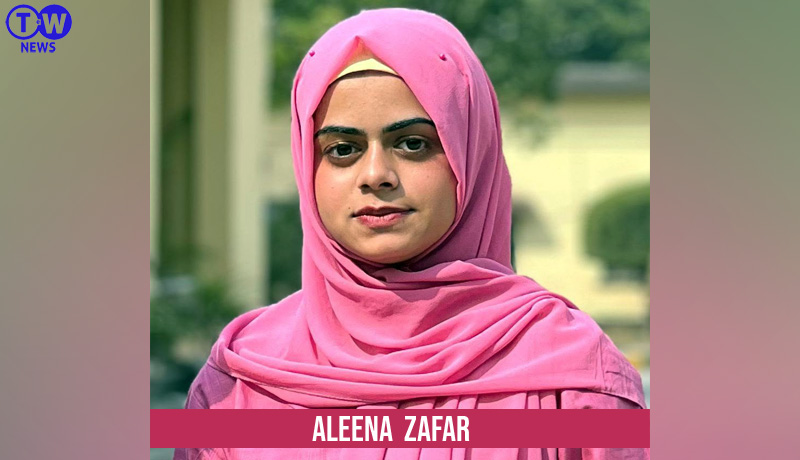
Author is an pursuing BS in English at National University of Modern Languages (NUML). She is also a member of the RoshniFoundation.She is research associate at KIIR.,
Leave a Reply
You must be logged in to post a comment.