

In politics, opportunities rarely knock twice. Political success depends not merely on public support, popular slogans or emotional attachment, but on timely decisions, strategic thinking and the wisdom to recognise the right moment. Unfortunately, Pakistan Tehreek-e-Insaf (PTI) appears to have developed a recurring political habit: reaching the station with considerable public enthusiasm but repeatedly failing to board the train of opportunity.
The question is not whether PTI has public support or political potential. It has demonstrated its ability to mobilise people, influence national political discourse and challenge established political structures. The real question is why a party with such considerable political strength repeatedly struggles to translate its popularity into meaningful political achievements.
PTI’s political journey offers several examples of opportunities that could have been converted into political gains. Negotiations could have opened new avenues, parliamentary engagement could have strengthened its position, political alliances could have expanded its influence, and a more pragmatic approach could have secured greater democratic space. Yet, political confrontation has too often taken precedence over strategic engagement, while emotional reactions have overshadowed political calculations.
There is a fundamental difference between political resistance and political wisdom. Resistance may generate headlines, attract public attention and energise supporters, but it cannot be the sole instrument of a political movement. A party aspiring to govern a country must demonstrate its ability to negotiate, accommodate opposing viewpoints, build consensus and work effectively within democratic institutions.
PTI’s frequent reliance on an all-or-nothing political approach has also restricted its room for manoeuvre. Political opponents are often treated as permanent enemies rather than democratic competitors with whom engagement may sometimes be necessary. However serious political differences may be, they should not become permanent barriers to dialogue and reconciliation.
Negotiations are not a sign of weakness, nor is compromise equivalent to surrender. In mature democracies, political parties may disagree fiercely, but they understand that national interests sometimes demand cooperation. Political leadership is ultimately judged by the ability to distinguish between personal grievances, party interests and the larger interests of the country.
Another serious challenge is the overdependence on one political personality. No political party can build a sustainable future merely around the popularity of its leader. Strong political institutions require capable second-tier leadership, internal democracy, effective parliamentary representation and a transparent mechanism for decision-making. Personal loyalty cannot substitute for institutional strength. A political party must be able to function effectively as an organisation, not merely as a movement revolving around one individual.
PTI must also recognise that the people of Pakistan cannot remain trapped in permanent political confrontation. The country faces enormous economic and social challenges. Inflation, unemployment, poverty, declining purchasing power and inadequate public services continue to affect millions of families. People need political leadership that offers credible economic policies, practical solutions and a vision for a better future. Political competition should ultimately be about improving the lives of citizens, not simply defeating opponents.
This does not mean that PTI should abandon its legitimate demands for democratic rights, transparency, electoral fairness or accountability. These are fundamental democratic principles and must be pursued consistently. However, the strategy adopted to achieve them matters enormously. Political wisdom lies in defending principles while remaining flexible in choosing the means to achieve them.
Political opportunities are time-sensitive. Circumstances change, alliances shift and political space opens and closes. A negotiation postponed, an initiative mishandled or a reasonable opportunity rejected can have consequences far beyond the immediate political moment. Waiting for ideal circumstances is often another way of losing the opportunities that are actually available.
There is a broader lesson here for Pakistan’s entire political leadership. Those in power often become arrogant, while those in opposition sometimes become prisoners of their own political narratives. Both forget that governments are temporary, political fortunes change and the ultimate authority in a democracy belongs to the people. No political party has a permanent claim to power, and no political leader is above accountability.
PTI still has considerable political relevance, public support and the opportunity to redefine its political direction. But this requires genuine introspection rather than simply blaming political opponents or unfavourable circumstances. Its leadership must examine why political initiatives have repeatedly failed to produce the desired results, why opportunities for engagement have been lost and why strategic flexibility has so often given way to confrontation.
The real test of leadership is not how loudly a party can protest, how many supporters it can gather or how aggressively it can criticise its opponents. It is whether it can transform public support into political influence, political influence into institutional strength and institutional strength into responsible governance.
Pakistan needs political leadership that places national interests above personal egos, institutional stability above individual ambitions and public welfare above partisan considerations. This responsibility applies equally to those in government and those in opposition.
PTI must understand that politics is not a permanent protest march. It is an art of timing, negotiation, strategic judgement and delivery. Public support is a valuable political asset, but squandering it through indecision, inflexibility and misplaced priorities represents a serious failure of leadership.
The question is no longer whether PTI has enough public support or political passengers waiting at the platform. The real question is whether its leadership possesses the vision to recognise an opportunity, the wisdom to make timely decisions, the courage to negotiate when necessary and the maturity to distinguish between stubbornness and principled resistance. A political train does not wait forever, nor does history offer unlimited chances to correct the same mistakes. PTI must decide whether it genuinely wants to reach its political destination or remain permanently stranded at the station, watching opportunity after opportunity disappear into the distance.
In politics, missing one train may be a mistake; repeatedly missing the train of opportunity is a failure of leadership.
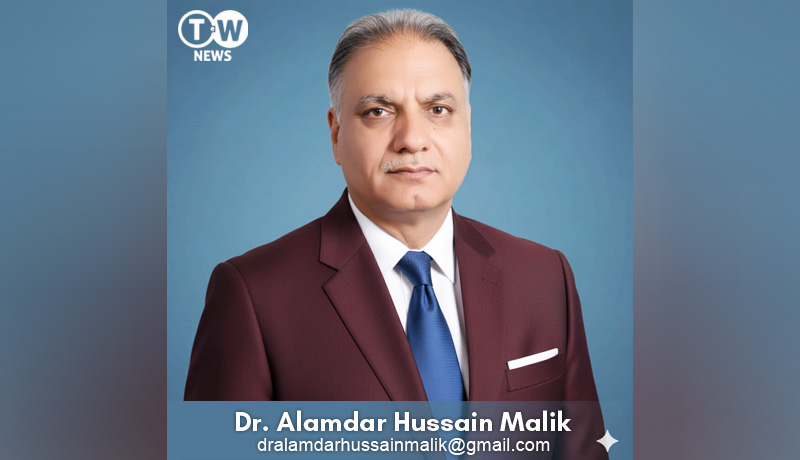
Dr Alamdar Hussain Malik
Former Financial Advisor, Finance Division, Government of Pakistan
Leave a Reply
You must be logged in to post a comment.