

The decision of 30 Doctor of Veterinary Medicine (DVM) students from two Bangladeshi universities, Chattogram Veterinary and Animal Sciences University (CVASU) and Gono University, to undertake their practical and professional training at the University of Veterinary and Animal Sciences (UVAS), Lahore, is a significant expression of confidence in the quality of veterinary education in Pakistan, its modern academic and research facilities, and the professional competence of its faculty. The successful completion of this programme is not merely an academic achievement; it is also an acknowledgement of UVAS Lahore’s international academic reputation and Pakistan’s educational standing.
The true success of an academic institution is not measured merely by its buildings, degrees or student enrolment, but by the confidence and recognition it earns beyond national boundaries. When universities from another country select an institution to provide their students with advanced knowledge, practical training and professional skills, it reflects that institution’s academic credibility, teaching standards, research capacity and the professional expertise of its faculty.
To appreciate the significance of UVAS Lahore, it is essential to look at its remarkable historical journey. The institution was established in Lahore in 1882 as a Veterinary School and is recognised among the oldest veterinary educational institutions in the subcontinent. It subsequently developed into the Punjab Veterinary College. In 1942, it became affiliated with the University of the Punjab, Lahore, and in 1971, it was affiliated with the University of Agriculture, Faisalabad. Finally, in June 2002, the College of Veterinary Sciences, Lahore, was upgraded to the University of Veterinary and Animal Sciences (UVAS), Lahore.
One can truly appreciate the magnitude of this historical journey: an institution that began as a veterinary school in 1882 has evolved into a fully-fledged university with an established academic, research and professional training profile. It represents almost a century and a half of institutional development, dedication by generations of teachers and sustained professional commitment. Its historic buildings remain symbols of its glorious past, while its modern faculties, research centres, laboratories and campuses reflect its continuing progress in meeting contemporary educational and scientific requirements.
Today, the real strength of UVAS Lahore lies in its advanced academic and research facilities, experienced faculty, trained specialists and well-integrated system of practical education. Veterinary education cannot be confined to textbooks and classroom lectures. Professional competence requires hands-on experience with modern diagnostic equipment and techniques, including ultrasonography, radiography, surgery, reproductive health, genetic research, disease diagnosis and advanced laboratory procedures.
The Bangladeshi students received practical training at UVAS Lahore in several important disciplines, including pregnancy diagnosis, semen collection and preservation, ultrasonography, radiography, veterinary and orthopaedic surgery, anaesthesia management, animal reproductive health, genomic DNA and RNA extraction, interpretation of serological tests and veterinary parasitology. These areas demonstrate the university’s academic and technical capacity to provide modern veterinary education and professional development.
Another significant feature of the programme was the assessment of students’ academic and practical competencies at both the beginning and the conclusion of their training. This indicates that UVAS did not treat the programme merely as an opportunity to host international students; rather, it organised it as a structured academic and professional training initiative.
The selection of a Pakistani veterinary university by 30 students from two Bangladeshi universities is no ordinary achievement. It reflects the confidence that international institutions can place in our qualified teachers, experienced specialists, modern laboratories and practical training facilities. This is a matter of national pride and an important opportunity to introduce Pakistan’s academic capabilities to the international community.
The credit for this achievement undoubtedly goes to the university leadership, particularly Vice Chancellor Professor Dr Masood Rabbani, Dean, Faculty of Veterinary Science, Professor Dr Kamran Ashraf, programme focal person Professor Dr Irfan Ahmad, Professor Dr Rashid-ul-Alam, and all the faculty members, specialists and organisers whose professional expertise, dedication and hard work contributed to the successful completion of this programme. Their efforts deserve sincere appreciation, because the true identity of an academic institution is reflected in the quality, commitment and professional contributions of its faculty.
Programmes of this nature can give a new dimension to the historical, cultural and academic relations between Pakistan and Bangladesh. Both countries face common challenges relating to livestock productivity, animal diseases, food security, genetic improvement and veterinary services. Addressing these challenges requires more than policy statements; it demands sustained collaboration between universities, joint research, faculty and student exchanges, and the sharing of modern scientific knowledge.
The need of the hour is to ensure that this achievement does not remain an isolated training programme but develops into lasting institutional cooperation. Veterinary universities in Pakistan and Bangladesh should explore joint research projects, international seminars, advanced training courses, faculty exchanges and mutual academic opportunities for students. Such initiatives can enable both countries to benefit from each other’s experience in veterinary education, animal health, livestock development and food security.
Other veterinary universities in Pakistan should also draw inspiration from this example. We need to introduce our academic and research capabilities to the international community, strengthen institutional linkages and create opportunities for international students to benefit from practical training in Pakistan. In this regard, the experience of UVAS Lahore can serve as a model worth emulating.
The arrival of 30 Bangladeshi students at UVAS Lahore sends an encouraging message. An institution that began in 1882 has evolved into a modern centre of veterinary education, research and professional training while preserving its historic identity. It demonstrates how sustained effort, institutional continuity, academic leadership and professional commitment can transform an educational institution into one that earns recognition beyond national boundaries.
The achievement of UVAS Lahore is not merely the success of one university; it is a success for veterinary education in Pakistan, the professional capabilities of our teachers and the academic prestige of our country. We should take pride in institutions that do not confine the light of knowledge within national borders but extend it to students and professionals from other countries.
The seed of knowledge and research planted in 1882 has grown into a mighty tree, under whose shade not only Pakistani students but also students from other countries are strengthening the foundations of their academic and professional futures. This is the true measure of a great educational institution and its enduring value as a national asset.
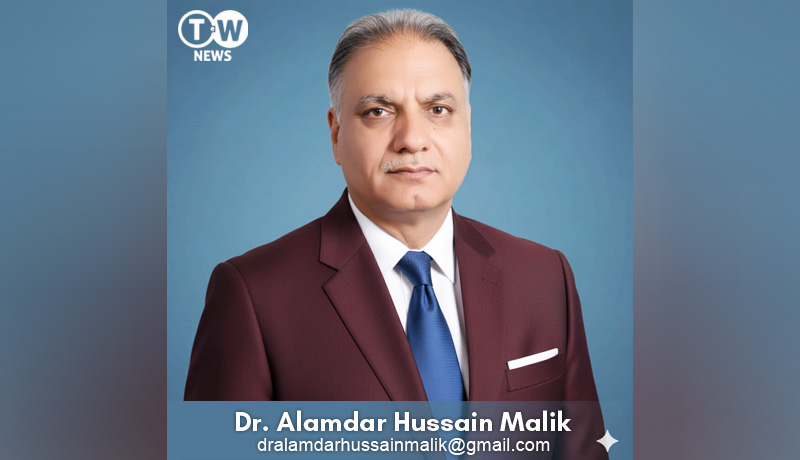
Dr Alamdar Hussain Malik (RVMP-001)
Advisor Academics, University of Veterinary and Animal Sciences, Swat
Former Secretary/Registrar, Pakistan Veterinary Medical Council
Leave a Reply
You must be logged in to post a comment.